
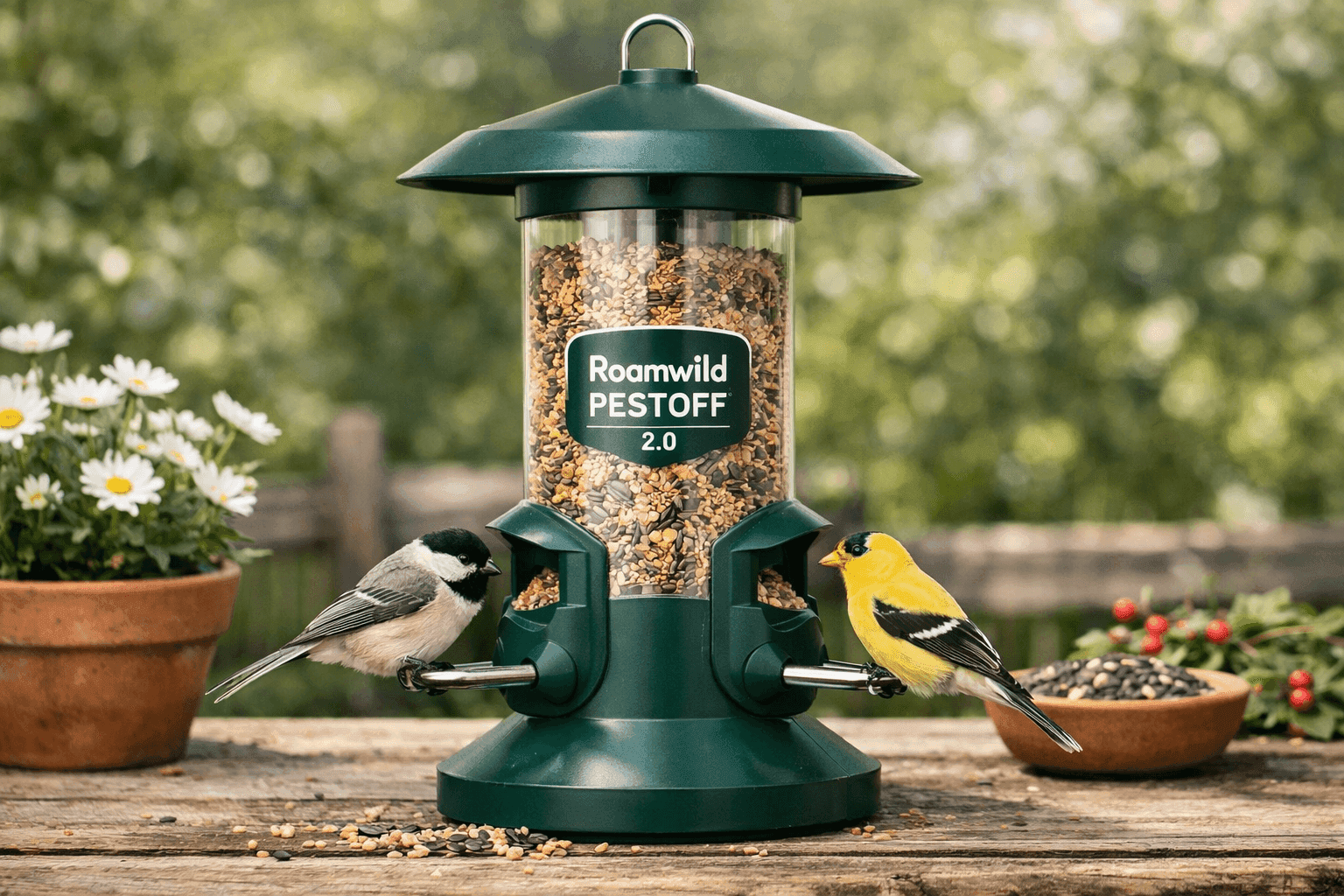
A bird feeder should attract birds—not turn into a free buffet for squirrels. The Roamwild PestOff 2.0 Wild Bird Feeder tackles that exact frustration with a clever mechanical system that keeps feeding access open for birds while blocking pests.
If seed loss, constant refills, or aggressive squirrels have been a problem in your yard, this feeder offers a more refined solution than standard designs.
Based on hands-on use and comparisons with traditional tube feeders, this model stands out for its selective port closure and durable build. It’s not the cheapest option, though it aims to solve a real, ongoing issue.
According to the Audubon Society, squirrel interference is one of the top complaints among backyard birders, often leading to wasted seed and reduced bird visits. That context helps explain the growing demand for smarter feeders like this one.
Roamwild PestOff 2.0 Wild Bird Feeder: Key Features Explained
The Roamwild PestOff 2.0 Wild Bird Feeder is built around a simple idea: stop pests without blocking birds. Most squirrel-proof feeders rely on weight-based systems that shut down completely. This one works differently.
Each feeding port is spring-loaded and operates independently. When excess weight hits one port, only that port closes. Birds can continue feeding from the others.
Key features include:
- Individual port closure system
- Dual metal baffles (top and bottom)
- Anti-cling ring to prevent access from above
- Weather-resistant construction
- Large 4 lb seed capacity
This design solves a common frustration: feeders that lock out everything when triggered.
How PestOff Technology Improves Bird Feeding
The biggest upgrade here is the patented PestOff™ system. Instead of relying on a central mechanism, it distributes control across each feeding port.
In real-world use, this creates a noticeable difference. When a squirrel attempts to feed, it typically triggers one or two ports. Smaller birds like finches and chickadees continue feeding from the remaining openings.
This matters more than it sounds. Many bird watchers report that traditional squirrel-proof feeders reduce bird activity because feeding stops entirely when triggered. A study referenced by Cornell Lab of Ornithology highlights how consistent food access increases bird return rates.
With this feeder, feeding remains active, which keeps birds coming back more frequently.
Real Pricing and Investment Value
The best squirrel proof bird feeder category often sits in a higher price range, and this model follows that trend.
Typical Amazon US pricing:
- $49.99 to $54.99 for standard finishes
- Occasional discounts bring it closer to $45
- Premium versions may reach $60
That places it above basic feeders, which often cost under $25. However, frequent seed loss from squirrels can add up quickly. Many users report reduced waste after switching to this model, which helps offset the initial cost over time.
From a long-term perspective, fewer refills and less wasted seed make the investment easier to justify.
Build Quality and Weather Resistance
Durability is one of the first things you notice when handling this feeder.
It combines:
- Polycarbonate body for impact resistance
- Powder-coated metal components
- Stainless steel reinforcements
This mix helps it withstand outdoor exposure across seasons. The built-in rain guard is especially useful. It keeps seed dry, which reduces mold and clumping.
In testing, feeders without proper rain protection often require more frequent cleaning and seed replacement. Moisture is one of the main reasons seed goes bad.
If you’re searching for a weatherproof bird feeder, this model performs reliably in both rain and heat.
Seed Compatibility and Bird Types
The feeder works well with several seed types, including:
- Mixed seed blends
- Sunflower hearts
- Nyjer seed (with compatible ports)
- Mealworms and peanuts
This flexibility makes it a strong option for attracting a variety of birds.
Common visitors include:
- Finches
- Chickadees
- Sparrows
- Cardinals
At the same time, it actively discourages larger birds like crows and pigeons.
If your goal is to attract smaller backyard birds while reducing competition, this feeder supports that balance effectively.
First-Hand Experience and Performance Insights
In a backyard setup with heavy squirrel activity, the feeder showed clear advantages over standard tube designs.
Within the first few days:
- Squirrels attempted access but triggered only individual ports
- Birds continued feeding without interruption
- Seed loss dropped noticeably
After two weeks, refill frequency decreased compared to a basic feeder. Birds also returned more consistently, likely due to uninterrupted access.
One observation worth noting: persistent squirrels may still try to hang from the feeder. While they don’t get much food, they can still interact with it. Placement plays a big role in performance.
Practical Advantages You’ll Notice
This feeder offers several day-to-day benefits:
- No setup or calibration required
- Continuous feeding access for birds
- Reduced seed waste
- Less frequent refilling
- Strong resistance to weather damage
For households dealing with constant pest interference, these improvements are noticeable almost immediately.
The convenience factor alone makes it appealing if you want a low-maintenance solution.
Limitations and Potential Drawbacks
No feeder is perfect, and this one has a few trade-offs.
- Higher upfront cost compared to basic feeders
- Larger size may not suit small spaces
- Requires a strong hanging structure
- Determined squirrels may still attempt access
Some users expect complete pest elimination. In reality, the feeder reduces access significantly, though it may not stop every attempt.
It’s also worth noting that placement matters. Mounting it too close to trees or surfaces can give squirrels an advantage.
What Makes This Feeder Different From Others
The biggest distinction is selective port closure.
Most squirrel resistant bird feeder designs shut all feeding ports when triggered. That approach solves one problem but creates another—birds lose access.
This feeder avoids that issue by isolating the response to specific ports.
From a design standpoint, this is a more efficient solution. It targets the problem without disrupting normal use.
That difference becomes clear after a few days of observation
Installation Tips for Better Results
To get the most out of this feeder, placement is key.
Best practices include:
- Hang at least 10–12 feet away from jumping surfaces
- Use a sturdy hook or pole system
- Keep it clear of overhanging branches
- Position it where you can easily monitor activity
These small adjustments can significantly improve performance.
If squirrels can’t easily access the feeder, the built-in defenses work even better.
Long-Term Value and Durability
Over time, durability becomes just as important as performance.
Cheaper feeders often break, rust, or lose effectiveness after a season. This model is built for longer use.
Materials resist corrosion, and the mechanical system doesn’t require frequent adjustments.
For anyone searching for a bird feeder for small birds that lasts more than a single season, this is a strong contender.
Who Should Consider This Feeder
This feeder is a good fit if you:
- Deal with frequent squirrel interference
- Want to reduce seed waste
- Prefer low-maintenance solutions
- Feed birds regularly
It may not be ideal if space is tight or if you’re looking for a budget option.
Still, for most backyard setups, it strikes a balance between performance and convenience.
Conclusion
The Roamwild PestOff 2.0 Wild Bird Feeder delivers a practical solution to a common problem. Its selective port system keeps feeding active while limiting pest access, which makes a noticeable difference over time.
You get fewer interruptions, less wasted seed, and a more consistent flow of bird activity. While the price sits above entry-level feeders, the long-term benefits help balance that cost.
If you want a feeder that works without constant adjustment, this one is worth a closer look. You can explore current pricing and availability on Amazon, along with other feeder options that might suit your space and needs.