
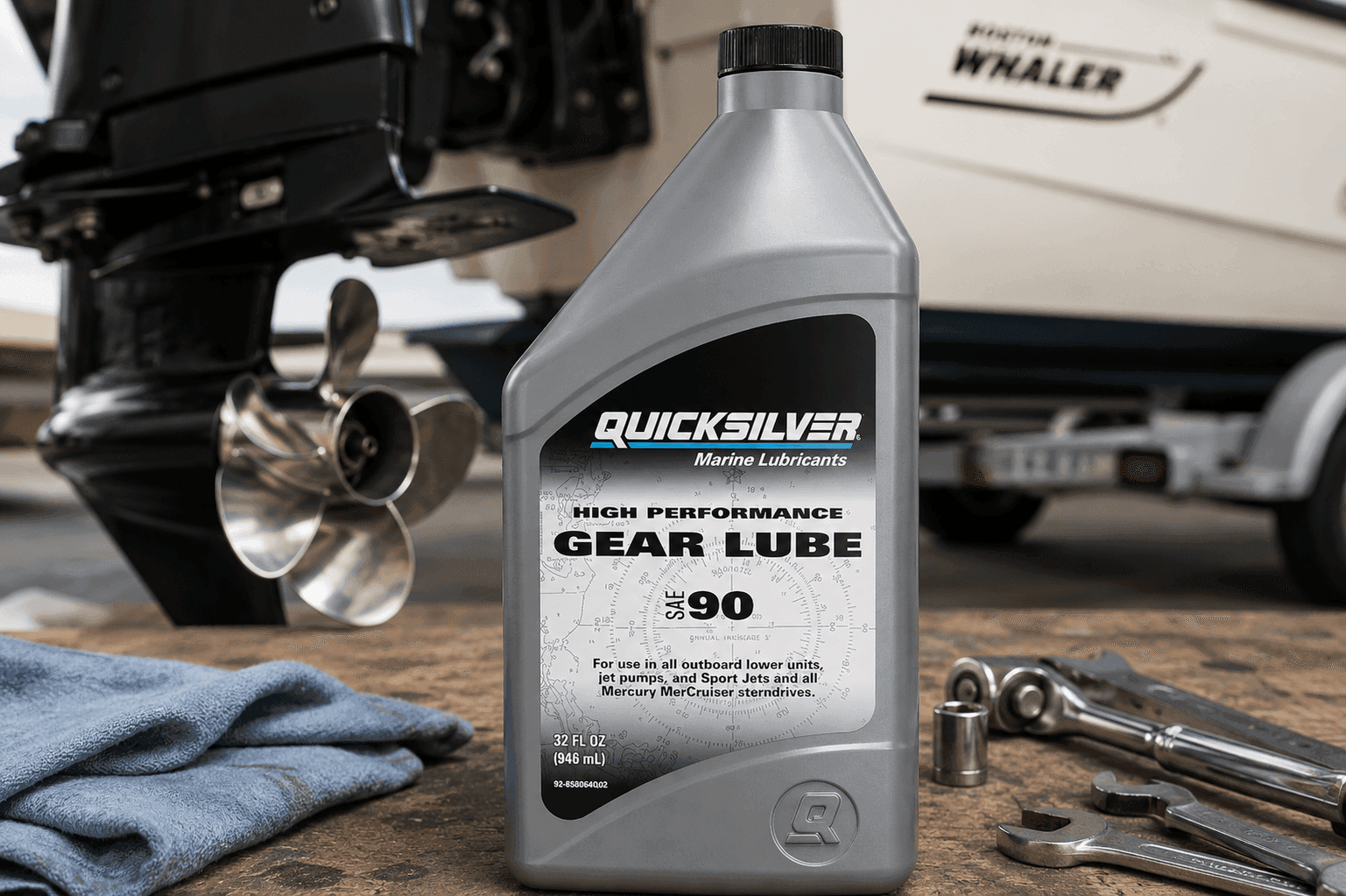
A lower unit repair bill can ruin a great day on the water fast. That’s one reason many boat owners stick with Quicksilver SAE 90 High Performance Gear Lube for outboards and sterndrives that face heavy loads, long runs, and rough saltwater conditions.
This marine gear oil is engineered by Mercury Marine to protect gears, bearings, and internal components from wear, overheating, rust, and water intrusion.
Marine lower units deal with constant stress, especially on high-horsepower boats. A standard automotive gear oil often lacks the additives needed for harsh marine environments.
Quicksilver’s formula uses extreme-pressure protection and water-resistant emulsifiers that help maintain lubrication if moisture enters the gearcase.
According to Mercury Marine service guidance, regular lower unit maintenance helps reduce premature wear and costly drivetrain damage. That matters for fishing boats, offshore setups, and weekend recreational vessels alike.
Quicksilver SAE 90 High Performance Gear Lube Features and Real-World Performance
One of the first things many boat owners notice is the thick blue-green formula. It clings well to gears and bearings during operation, especially in high-load situations.
Key features include:
- Extreme-pressure additives for gear protection
- Anti-corrosion inhibitors for saltwater use
- Water-resistant emulsifiers to reduce damage from moisture intrusion
- Anti-foaming technology for smoother lubrication flow
- Tackifiers that help the oil stay on moving components
- Designed for Mercury Marine and MerCruiser applications
This lubricant is commonly used in engines above 75 HP. It works especially well in demanding marine environments where gearcases operate under heavy stress for long periods.
Several marine technicians report fewer signs of gear scoring and metal wear during routine inspections when OEM marine lubricants are used consistently. That practical experience lines up with the product’s long-standing reputation in the boating community.
Why Boat Owners Choose Marine Gear Oil Instead of Automotive Gear Oil
Some people try to save money with automotive gear oils, though marine lower units face very different conditions.
A car differential rarely deals with water exposure. Boat gearcases constantly battle moisture, condensation, and seal wear. Once water enters the lower unit, lubrication quality can drop quickly.
That’s where marine lower unit oil formulas like Quicksilver SAE 90 help. The emulsifiers continue protecting gears even after minor contamination occurs.
Marine mechanics often point out these advantages:
- Better resistance to corrosion
- Improved protection under high RPM conditions
- Stronger defense against gear pitting
- Longer-lasting lubrication in wet environments
For saltwater boaters, corrosion protection matters even more. Salt exposure accelerates internal wear if lubrication breaks down.
Real Amazon US Pricing and Available Sizes
Pricing changes throughout the year, especially during peak boating season. Based on recent Amazon US listings and marine retailer pricing, these are the typical ranges:
Size Average Price
8 oz Tube $8 – $14
32 oz / 1 Quart $18 – $28
1 Gallon $65 – $95
2.5 Gallon $120 – $180
Popular part numbers include:
Size Part Number
8 oz Tube 802851Q02
1 Quart 858064Q01
Updated Quart SKU 8M0222065
1 Gallon 8M0058389
Amazon remains one of the easiest places to find the quart bottles and tubes, especially during boating season.
Best Applications for Quicksilver Marine Gear Lube
This lubricant works with several Mercury-based systems and many marine lower units requiring SAE 90 hypoid gear oil.
Compatible applications include:
- Mercury outboards
- MerCruiser sterndrives
- Mariner outboards
- Force outboards
- Alpha One drives
- Bravo drives
- Sport Jet systems
This makes it a common choice for:
- Offshore fishing boats
- Bass boats
- Recreational runabouts
- Saltwater performance boats
- Commercial marine setups
The product is less suitable for very small engines that require lighter lubricants or specialty synthetic formulas.
How Water Intrusion Damages a Lower Unit
Water intrusion is one of the biggest threats to marine drivetrains. Even small amounts of moisture can reduce lubrication quality over time.
Common causes include:
- Damaged prop shaft seals
- Fishing line wrapped around seals
- Aging O-rings
- Condensation during storage
- Impact damage from debris
Once contamination starts, the oil often turns milky. That cloudy appearance usually signals immediate service is needed.
One experienced marine technician shared that lower units with repeated water contamination often show accelerated bearing wear within a single season. In many cases, the issue traces back to damaged seals that were ignored too long.
Using a dedicated Mercury Marine gear lube can help reduce damage after minor contamination occurs, though it cannot replace damaged components.
How Often Should You Change Lower Unit Oil?
Most marine service schedules recommend changing lower unit lubricant every 100 operating hours or at least once per season.
Heavy saltwater use may require more frequent inspections.
During maintenance, look for:
- Milky oil
- Burnt smell
- Metal flakes
- Excessive discoloration
- Water separation
Routine maintenance costs far less than rebuilding a damaged gearcase.
According to data from marine repair shops, lower unit rebuilds can range from several hundred dollars to well over $2,000 depending on engine size and internal damage. Preventive maintenance remains one of the easiest ways to avoid major repair expenses.
Saltwater Performance and Corrosion Protection
Saltwater conditions create constant exposure to corrosion. Internal gears and bearings need protection from moisture and oxidation during operation and storage.
This is one reason many offshore boaters prefer SAE 90 gear lube for boats with marine-specific anti-rust additives.
Quicksilver’s formula coats internal components well and maintains stable lubrication during extended operation at high temperatures.
Long-term users often mention:
- Smoother shifting
- Reduced gear noise
- Cleaner drain oil during maintenance
- Consistent performance during long offshore trips
That said, no lubricant completely eliminates maintenance needs. Lower units still require regular inspections, seal checks, and seasonal servicing.
Comparing Quicksilver SAE 90 vs Synthetic Marine Gear Lube
Some boat owners debate between conventional and synthetic marine lubricants.
Synthetic gear lubes may offer:
- Better cold-weather flow
- Longer oxidation resistance
- Improved extreme-temperature stability
Still, Quicksilver SAE 90 remains popular because it is OEM-approved for many Mercury and MerCruiser systems. Many marine mechanics trust it because it was engineered specifically around those drivetrains.
For recreational boating, the performance difference may not justify the higher synthetic cost. Commercial operators running long hours daily may see additional benefits from premium synthetic formulas.
That balance often comes down to engine type, climate, boating frequency, and maintenance habits.
Pros and Cons After Long-Term Use
After reviewing technician feedback, boating forums, and owner experiences, several consistent strengths and drawbacks appear.
Pros
- Excellent water contamination resistance
- Strong corrosion protection
- Trusted OEM Mercury formulation
- Works well in high-horsepower applications
- Widely available online and in marine stores
- Good long-term wear protection
Cons
- Higher price than automotive gear oils
- Strong odor during servicing
- Bottle spout can get messy
- Conventional formula instead of full synthetic
Even with those minor drawbacks, many owners continue using it season after season because reliability matters more than saving a few dollars on lubricant.
What Marine Technicians Commonly Say About This Product
Marine repair professionals often recommend sticking with lubricants designed specifically for marine gearcases.
A common concern with automotive oils is reduced protection after water exposure. Marine lubricants are built differently because they operate in completely different environments.
Several mechanics note that high performance gear lube for outboards should always include:
- Water resistance
- Corrosion inhibitors
- Extreme-pressure protection
- Stable viscosity under heavy load
Quicksilver SAE 90 checks those boxes for many Mercury-based systems.
Professional shops also appreciate that the lubricant aligns with Mercury warranty recommendations, which helps avoid compatibility concerns during service work.
Final Thoughts
Keeping a lower unit healthy takes more than changing oil once in a while. Marine drivetrains operate under heavy stress, especially in saltwater conditions where moisture and corrosion never stop working against internal components.
Quicksilver SAE 90 High Performance Gear Lube continues to earn strong feedback from boat owners, offshore anglers, and marine technicians because it delivers dependable protection in real-world conditions. The formula handles heat, heavy loads, and minor water intrusion better than many standard gear oils designed for automotive use.
The price sits higher than basic alternatives, though many boaters see that extra cost as cheap insurance compared to lower unit repairs.
If you want to check current Amazon pricing, compare bottle sizes, or read more owner reviews, it’s worth taking a closer look online. You may also find additional marine maintenance products that fit your setup and boating routine.