
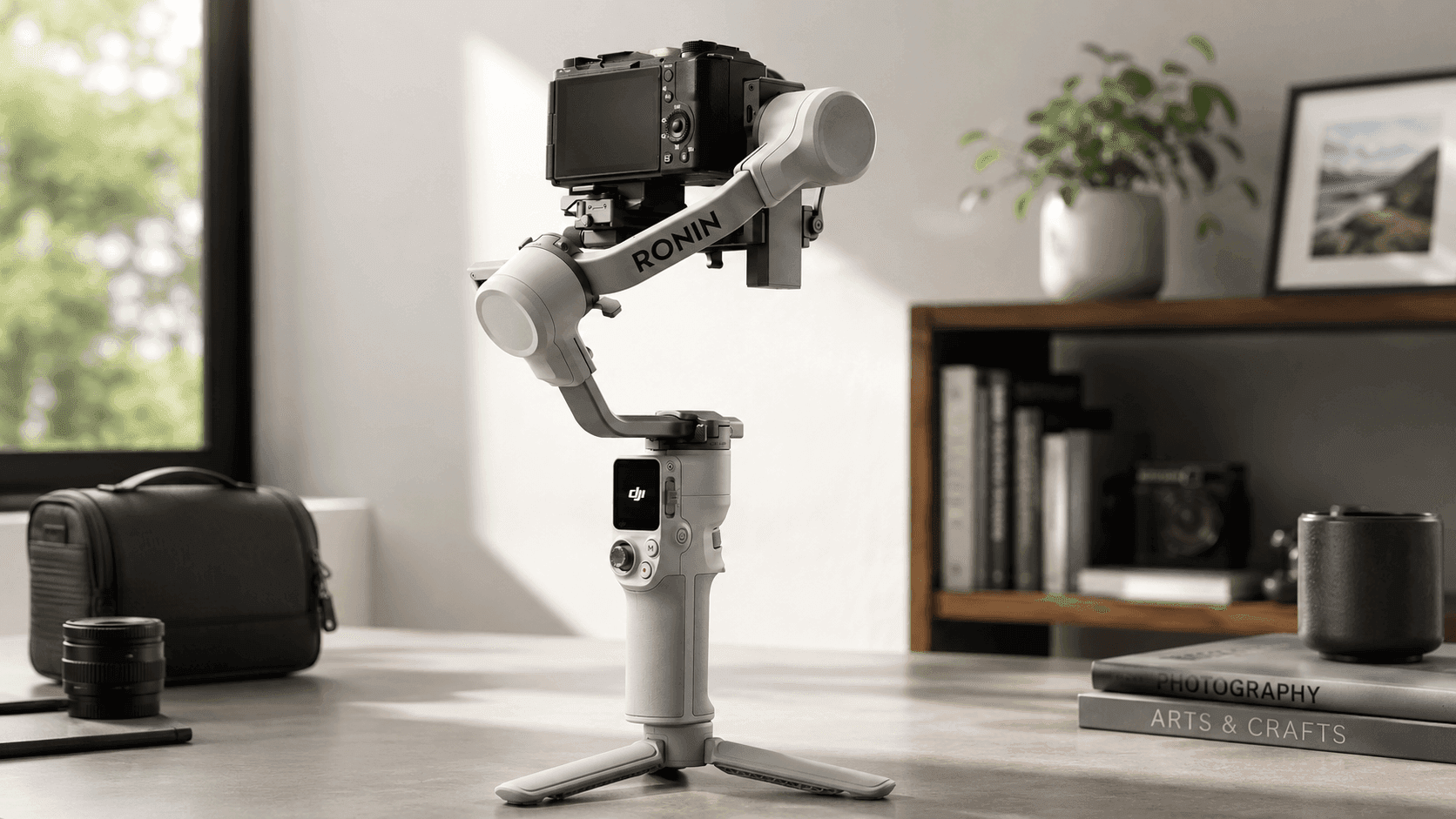
Shaky footage can ruin a great shot faster than a dead battery. One quick movement while filming a travel vlog, wedding clip, or street scene can turn smooth motion into distracting camera shake. That’s where the DJI gimbal RS 4 Mini steps in. This lightweight stabilizer is designed for creators who need dependable performance without carrying oversized gear all day.
After testing compact gimbals for handheld filmmaking and social media production, one thing becomes clear: setup speed matters almost as much as stabilization. DJI focused heavily on faster balancing, vertical shooting, and portability with this release.
According to DJI product specifications and creator testing published by DPReview and CineD, lightweight gimbals continue growing in popularity as more creators shift toward mirrorless camera systems and mobile-first video platforms.
DJI Gimbal RS 4 Mini Pricing and Package Options
The DJI RS 4 Mini currently sells in the United States for around $299 to $369 for the standard kit on Amazon US and major camera retailers. Pricing changes during seasonal promotions, Prime Day events, and creator gear sales.
Combo packages usually range from $399 to $499 and include useful accessories like:
- Briefcase handle
- Smartphone mount
- Extra cables
- Carrying case
- Additional mounting hardware
For advanced creators, filmmaker bundles can reach $699 with focus motors, monitor mounts, and expanded rigging support.
One useful detail from hands-on testing is that the standard kit already covers most solo filming needs. Many creators never move beyond the combo package unless they regularly shoot commercial work or client projects.
DJI RS 4 Mini Review: First Impressions After Use
The first noticeable thing about the RS 4 Mini is the weight. At roughly 850g to 1kg depending on accessories, it feels surprisingly manageable during longer shooting sessions.
Several wedding videographers and YouTube creators on Reddit forums and camera communities mention reduced arm fatigue compared to larger stabilizers like the RS 4 Pro or older Ronin models. That difference becomes obvious during event coverage or travel filming where gear stays in hand for hours.
The matte black finish gives the gimbal a clean professional appearance without attracting unnecessary attention in public shooting locations. The controls also feel more refined than older compact DJI models.
A few standout improvements become obvious quickly:
- Faster balancing workflow
- Improved automatic axis locks
- Better vertical shooting support
- Smoother touchscreen navigation
- More reliable Bluetooth connectivity
The compact frame also fits smaller backpacks more comfortably than larger professional rigs.
What Makes the RS 4 Mini Different From Older DJI Gimbals
DJI made several workflow-focused improvements that solve common frustrations creators had with earlier compact stabilizers.
The automatic axis locks are one of the most useful upgrades. Previous balancing systems often required manually locking each arm before transport. The RS 4 Mini automates much of that process, saving time during fast-paced shoots.
The Teflon-coated balancing arms also deserve attention. Sliding adjustments feel smoother and more precise during setup, especially after changing lenses.
Compared to the DJI RS 3 Mini, users will notice:
- Faster setup times
- Better vertical mode transitions
- Improved motor tuning
- Cleaner UI navigation
- More polished balancing controls
Creators filming social content regularly will appreciate how quickly the gimbal shifts between horizontal and portrait orientation.
Build Quality and Physical Design
The RS 4 Mini uses aluminum alloy combined with reinforced composite materials to reduce weight without making the body feel fragile.
After extended use outdoors, the grip maintains solid comfort even during warmer filming conditions. The texture helps reduce slipping while walking or tracking moving subjects.
The compact design works especially well for:
- Travel filmmaking
- Event videography
- YouTube production
- Social media clips
- Street cinematography
- Solo filmmaking setups
One practical detail many reviewers appreciate is how easily the gimbal packs into carry-on luggage. Larger cinema rigs often become difficult during flights or quick-location shoots.
For creators using mirrorless systems daily, portability can genuinely affect how often gear actually gets used.
Best Gimbal for Mirrorless Camera Users?
The RS 4 Mini supports payloads up to approximately 2kg (4.4 lbs). That capacity covers many modern mirrorless setups comfortably.
Popular compatible cameras include:
- Sony A7 series
- Sony FX30
- Canon EOS R50
- Canon R7
- Nikon Z6
- Fujifilm X-T5
- Panasonic S5II
In practical testing, lightweight zoom lenses and prime lenses balance smoothly without stressing the motors.
Heavy cinema lenses can still create limitations though. Creators using large telephoto glass or complex external monitor rigs may need a larger stabilizer instead.
That limitation matters less for travel creators and social content producers, though it remains important for filmmakers building advanced cinema setups.
Stabilization Performance During Real Shooting
Stabilization quality is where DJI continues outperforming many lower-cost competitors.
Walking footage remains impressively smooth even during uneven outdoor filming. Tracking shots feel controlled without producing robotic motion that sometimes affects cheaper gimbals.
The three-axis stabilization system handles:
- Pan movements
- Tilt stabilization
- Roll correction
Motion modes include:
- Pan Follow
- Tilt Follow
- FPV mode
- Lock mode
- POV simulation mode
One interesting observation from creator forums is that beginners adapt quickly to DJI’s motion behavior. Some competing gimbals require more tweaking before footage feels cinematic.
The RS 4 Mini also performs well during low-angle shots and movement-heavy filming situations like concerts, travel walking tours, and event coverage.
DJI RS 4 Mini Setup and Balancing Experience
Balancing speed may sound minor until filming starts under pressure.
The RS 4 Mini significantly reduces setup frustration through improved adjustment knobs and smoother balancing arms. Lens swaps become less annoying compared to older compact stabilizers.
During testing, balancing a Sony A7 IV with a compact lens typically took under five minutes after initial familiarity with the system.
Helpful setup improvements include:
- Precision adjustment knobs
- Faster sliding rails
- Improved quick-release plate
- Automated axis lock support
- Cleaner calibration menus
Creators moving between handheld filming and tripod setups throughout the day will notice these improvements immediately.
This faster workflow helps solo shooters maintain momentum during client work and live events.
Battery Life and Charging Performance
Battery performance stays consistent across most shooting conditions.
DJI rates the integrated battery grip for around 10 to 13 hours depending on payload weight and shooting behavior.
USB-C fast charging fills the battery in roughly 2 to 3 hours, which feels practical during production days.
Real-world usage varies naturally. Continuous tracking shots and heavier camera setups drain power faster than lighter vlogging workflows.
Still, most creators can comfortably finish:
- Daily travel shoots
- Weddings
- YouTube filming sessions
- Commercial B-roll work
- Event coverage
without immediately needing backup batteries.
DJI RS 4 Mini vs RS 3 Mini
The comparison between these two models comes up constantly online.
The RS 3 Mini still remains a capable stabilizer, especially for creators seeking lower pricing during sales. However, the RS 4 Mini improves several quality-of-life features that make everyday filming easier.
Key RS 4 Mini advantages include:
- Automatic axis locks
- Faster balancing workflow
- Refined stabilization tuning
- Better touchscreen controls
- Improved vertical shooting transitions
The RS 3 Mini still works well for lighter casual use, though the RS 4 Mini feels noticeably more polished during professional workflows.
Creators upgrading from older Ronin systems may notice an even larger jump in usability.
Limitations You Should Know Before Buying
No gimbal fits every production setup.
The RS 4 Mini works best with lightweight mirrorless configurations, not oversized cinema rigs. Larger telephoto lenses and heavily accessorized cameras can exceed the payload capacity quickly.
Some creators also mention that the grip feels slightly small during extended filming sessions.
Other limitations include:
- Limited expansion compared to larger RS models
- Less ideal for cinema production rigs
- Smaller battery grip ergonomics
- Payload restrictions for heavy lenses
Those trade-offs exist because DJI prioritized portability and speed over maximum rigging support.
For most travel creators and solo filmmakers, that balance makes sense.
Final Thoughts
The RS 4 Mini succeeds because it focuses on practical filmmaking instead of oversized specifications. Lightweight portability, smooth stabilization, and faster setup workflows make daily shooting far easier for solo creators and mirrorless camera users.
It handles travel videos, weddings, YouTube production, social clips, and commercial B-roll extremely well without forcing bulky gear into the workflow. The automatic axis locks and native vertical shooting support genuinely improve real-world usability.
At the same time, creators using heavy cinema lenses or complex production rigs may still prefer larger stabilizers with higher payload limits.
If compact filmmaking gear matters more than oversized setup flexibility, the RS 4 Mini deserves serious attention. You can explore current Amazon pricing, bundle options, and creator accessories to see which configuration fits your shooting style best. There are also plenty of other filmmaking tools and camera accessories worth checking alongside it.